🕸️ GraphQL Security Review and Abuse Patterns
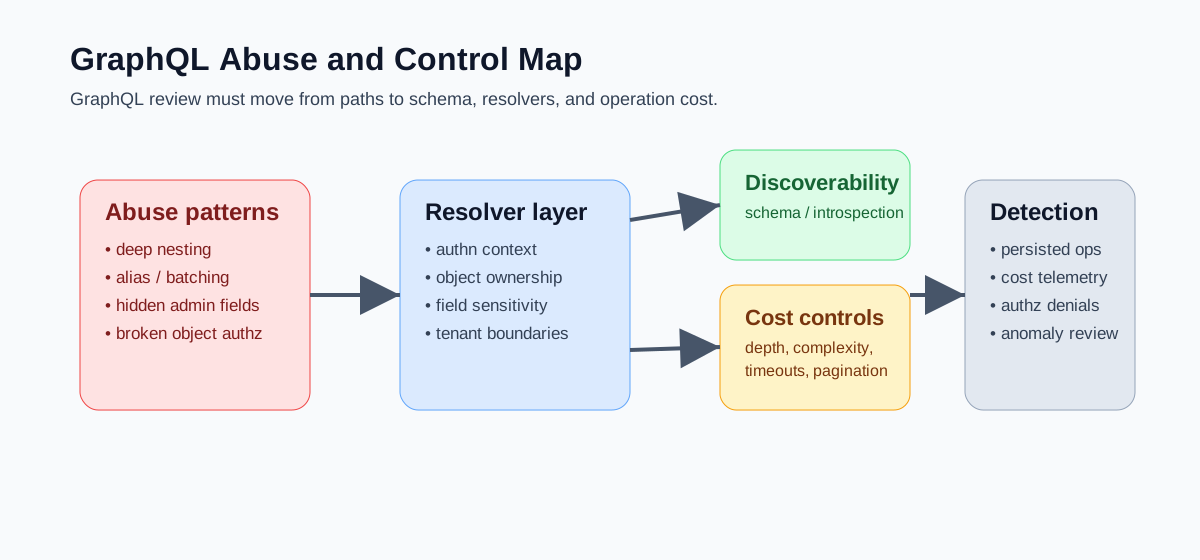
Intro: GraphQL compresses a great deal of power into one endpoint. This changes how discovery, authorization, and abuse resistance should be reviewed.
What this page includes
- a practical GraphQL review model
- where GraphQL differs from REST in security terms
- authorization and abuse patterns that commonly fail
- current defensive controls for production systems
What to review first
Schema discoverability
Ask whether introspection is enabled in production, whether internal or admin-only fields are visible in the public schema, and whether schema docs leak workflow assumptions.
Resolver authorization
The most common failure is assuming top-level authorization is sufficient. Verify top-level query and mutation access, object-level checks in nested resolvers, field-level exposure, and tenant filtering that survives complex query shapes.
Operation cost and abuse resistance
Review whether the service implements:
- depth limits;
- complexity or cost scoring;
- pagination and list-size enforcement;
- timeouts and resolver budgets;
- rate limits for expensive actor/object combinations.
Common failure modes
- path-based API review without resolver-by-resolver authorization;
- hidden UI fields that remain queryable;
- large nested queries or alias abuse exhausting resources;
- batching that turns one request into many expensive operations;
- admin or debug resolvers left in production schema.
Logging and detection
Capture more than status code and latency. Useful signals include operation name, caller, depth/complexity characteristics, expensive resolver paths, and authorization denials.
Review checklist
- production schema discoverability decision documented
- resolver-level and object-level authorization tested
- field-level sensitive data review completed
- depth, complexity, pagination, and timeout controls enabled
- query logging and anomaly review available for operators
Related pages
- API Design and Contract Security
- API Authentication and Authorization
- API Abuse Resilience and Rate Limits
- API Testing, Observability, and Release Gates
Author attribution: Ivan Piskunov, 2026 - Educational and defensive-engineering use.