Senior Engineer Perspectives
Section focus: Senior Engineer Perspectives.
Best use: start with the section map below, then move into the deeper pages that match your role or stack.
Design note: this index was refreshed to act as a cleaner GitBook landing page instead of a plain directory listing.
Start with these pages
| Page | Why open it first |
|---|---|
| 🎯 Advanced Detection and Response for Senior Engineers | High-value page inside Senior Engineer Perspectives. |
| ⚖️ Security Decision Frameworks and Tool Trade-Offs | High-value page inside Senior Engineer Perspectives. |
| 🏗️ Architecture Trade-Offs for Security and Platform Teams | High-value page inside Senior Engineer Perspectives. |
| 🚫 Real-World Security Anti-Patterns and Failure Modes | High-value page inside Senior Engineer Perspectives. |
| 📏 Performance, Scale, and Friction Management | High-value page inside Senior Engineer Perspectives. |
| 🪜 Staff / Principal Calibration Rubric and Signal Ladder | Use this to calibrate seniority, scope, and interview bar for advanced IC roles. |
Related sections
Intro: This section is for readers who already know the baseline controls and want the harder part: how to make good security decisions under real engineering constraints. It focuses on trade-offs, scale, telemetry quality, friction management, and the reasons strong controls still fail in production.
What this page includes
- advanced detection and response thinking for senior engineers
- decision frameworks for choosing tools and controls
- architecture trade-offs for platforms, pipelines, and SaaS products
- real-world anti-patterns that break otherwise good programs
- operating at scale without drowning teams in process
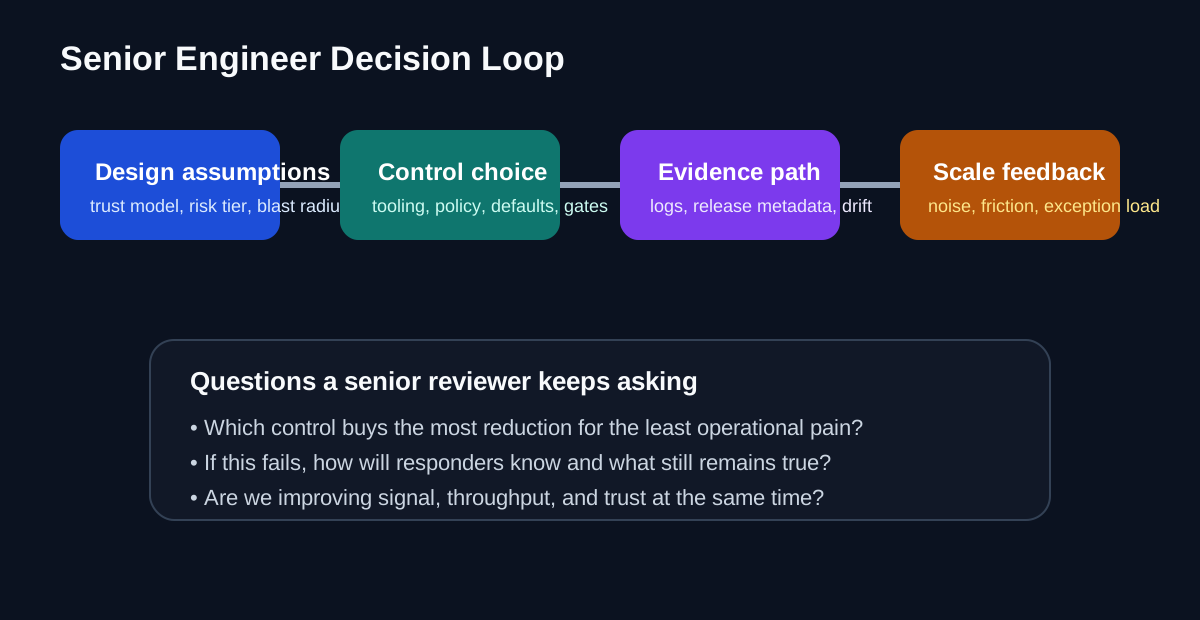
Figure: a senior-engineer review loop from design assumptions to telemetry and scale feedback.
Section map
| Page | Why it belongs here |
|---|---|
| Advanced Detection and Response for Senior Engineers | Explains what mature teams log, detect, and correlate — and what they intentionally ignore. |
| Security Decision Frameworks and Tool Trade-Offs | Helps teams choose between overlapping controls without cargo-culting vendor categories. |
| Architecture Trade-Offs for Security and Platform Teams | Covers common design choices where both sides are right and context matters. |
| Real-World Security Anti-Patterns and Failure Modes | Documents why “good controls” still fail after rollout. |
| Performance, Scale, and Friction Management | Focuses on making the program sustainable in fast-moving product organizations. |
| Staff / Principal Calibration Rubric and Signal Ladder | Helps calibrate advanced IC hiring and leveling decisions. |
Reader bias
This section assumes the reader already understands baseline hardening. The goal is to help them answer harder questions such as:
- Which control is worth the operational cost?
- What telemetry is genuinely worth collecting?
- Where does program friction pay off, and where does it destroy adoption?
- How do we improve signal, speed, and trust at the same time?
Best cross-links
- Detection and Response
- Secure Architecture Patterns
- Identity and Platform Access
- CI/CD and Software Supply Chain Security
Author attribution: Ivan Piskunov, 2026 - Educational and defensive-engineering use.