
Secure Architecture Patterns
Section focus: Secure Architecture Patterns.
Best use: start with the section map below, then move into the deeper pages that match your role or stack.
Design note: this index was refreshed to act as a cleaner GitBook landing page instead of a plain directory listing.
Start with these pages
| Page | Why open it first |
|---|---|
| 🏢 Multi-Tenant SaaS and Admin-Plane Patterns | High-value page inside Secure Architecture Patterns. |
| 🔗 Service-to-Service Auth, Webhooks, and Event-Driven Security | High-value page inside Secure Architecture Patterns. |
| 🌐 Zero-Trust Egress and Private Connectivity Patterns | High-value page inside Secure Architecture Patterns. |
| 🧱 Secure Defaults and Golden Paths for Product and Platform Teams | Turns standards into paved roads, templates, and measurable adoption. |
Related sections
Intro: This section turns security advice into reusable architecture patterns. The goal is to help teams make good structural decisions before they start arguing about scanner output.
What this page includes
- multi-tenant SaaS and admin-plane patterns
- service-to-service authentication and identity propagation
- webhook and event-driven security
- egress control, private connectivity, and zero-trust service patterns
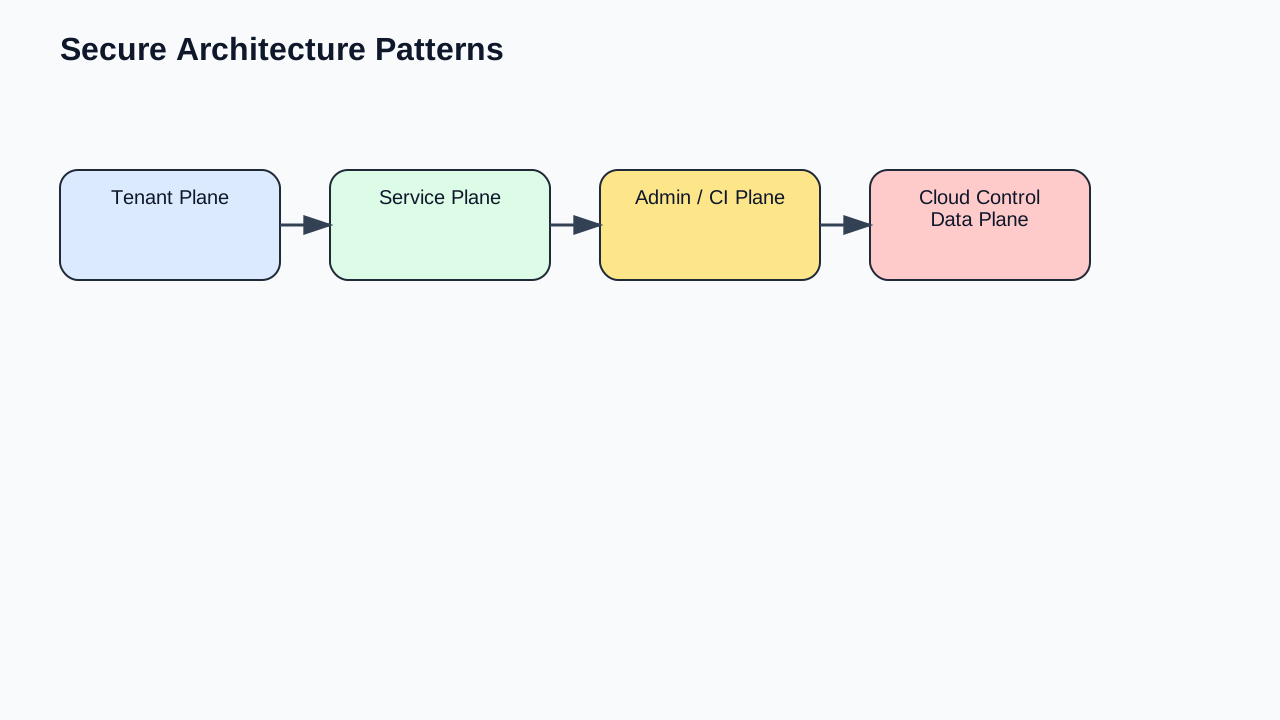
Figure: the main trust planes that architecture review should keep separate.
Section map
| Page | Why it belongs here |
|---|---|
| Multi-Tenant SaaS and Admin-Plane Patterns | Covers the boundaries most likely to create product-security incidents. |
| Service-to-Service Auth, Webhooks, and Event-Driven Security | Treats internal calls, external callbacks, and message flows as first-class security designs. |
| Zero-Trust Egress and Private Connectivity Patterns | Connects network shape to data exfiltration and control-plane abuse. |
| Secure Defaults and Golden Paths for Product and Platform Teams | Encodes safer defaults into templates, policies, and evidence instead of relying on repeated manual review. |
Design bias
Prefer patterns that reduce the amount of implicit trust the product accumulates over time.
Related pages
Suggested reference links
Author attribution: Ivan Piskunov, 2026 - Educational and defensive-engineering use.