🧩 CSP, SRI, and Third-Party JavaScript Control Patterns
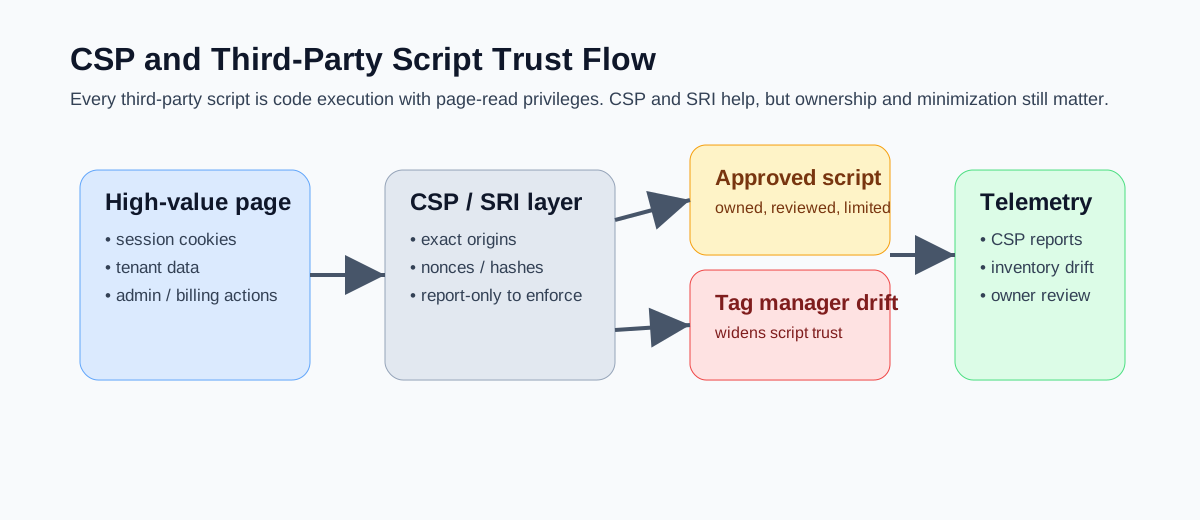
Intro: This page turns XSS-defense and third-party dependency guidance from the uploaded books into a compact engineering review model.
What this page includes
- practical CSP design choices
- when SRI helps and when it does not
- how to review third-party JavaScript in a product-security workflow
- modernization notes beyond older copy-paste header recipes
Why CSP still matters
CSP is not a silver bullet. It is a compensating and containment control that narrows which script sources may execute, helps reduce damage when templating or sanitization fails, and gives the team a deployable allow-list with telemetry.
Practical rollout pattern
- List required first-party and third-party script origins for each high-value page class.
- Start with report-only mode on representative traffic.
- Reduce inline script debt deliberately using nonces or hashes where needed.
- Move important surfaces to enforced policy.
Script-source decisions
A safer default is:
- self-host where practical;
- allow exact origins instead of wildcards;
- review every third-party script as code execution, not as “just telemetry.”
Questions to ask:
- Can this script read authenticated page content?
- Can it issue same-origin requests or invoke app actions?
- Can the vendor change behavior without your release process noticing?
SRI in the real world
SRI is useful for fixed-version static external assets, but it does not solve tag-manager chaining, runtime widget injection, or broad third-party trust. Inventory control and ownership remain essential.
Common failure modes
- broad
script-srcwildcards that survive forever after a rushed integration; unsafe-inlinekept permanently because the team never budgeted remediation;- tag managers treated as lower-risk than direct scripts;
- no owner for stale widgets, chat tools, or abandoned A/B test code.
Release criteria
- CSP reviewed per page class, not only globally
- every third-party script has a documented owner and purpose
- high-value pages reviewed for script minimization
- SRI used where external static assets are intentionally loaded
- CSP violations routed to telemetry with triage ownership
Related pages
- Browser Security Foundations: CSP, CORS, Cookies, and Sessions
- Third-Party Scripts, File Handling, and Frontend Supply Chain
- Security Headers and Reference Configurations
Author attribution: Ivan Piskunov, 2026 - Educational and defensive-engineering use.