🍪 Session Security, Browser State, and AuthZ Review Patterns
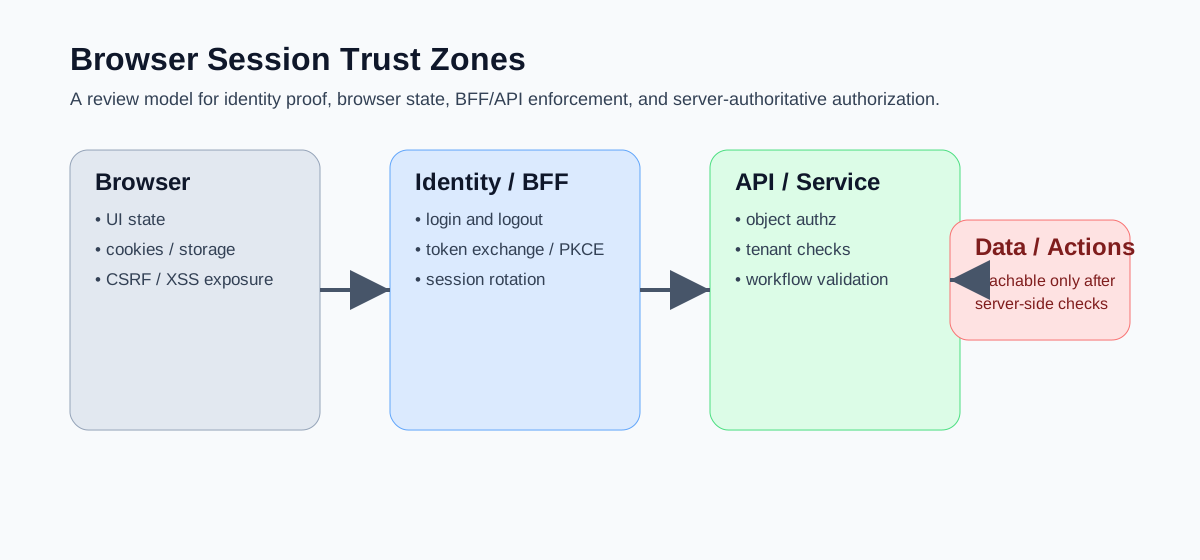
Intro: This page captures the most useful architecture and review ideas from the uploaded web application security material and translates them into practical product-review checks.
What this page includes
- session and cookie review patterns for modern web products
- how to separate authentication from authorization in browser-heavy systems
- browser state, storage, and token-placement decisions
- defensive notes on CSRF, session fixation, and trust-by-default mistakes
Authentication is not authorization
A recurring engineering mistake is to let frontend state imply authority. Login success proves identity. It does not prove that a user may read another tenant object, approve a sensitive action, or call an administrative workflow.
A safer design bias is:
- the frontend can suggest intent;
- the backend must re-check authority;
- object ownership, tenant boundaries, and workflow state remain server-authoritative.
Session patterns that scale better
For higher-value products, prefer a server-held session or a BFF-mediated pattern when practical. This reduces browser exposure to tokens and centralizes upstream policy.
A browser token model can still work, but it deserves stricter review:
- why must the browser hold this token;
- what is its audience and scope;
- what is its lifetime;
- what happens on revocation, logout, and device loss.
Cookie and browser-state defaults
A practical baseline:
Securefor session cookies;HttpOnlyunless JavaScript truly needs cookie access;- explicit
SameSiteinstead of relying on defaults; - short idle timeout and separate absolute timeout for higher-risk sessions;
- rotation on privilege change, password reset, or major risk events.
Also review whether important state leaks into localStorage, sessionStorage, URLs, cached HTML bootstraps, or client-side feature-flag payloads.
CSRF protection in modern apps
A pragmatic stack for browser flows:
- stricter cookie posture first;
- CSRF tokens for state-changing browser actions;
Originverification where possible and careful fallback toRefererhandling;- GET requests that stay safe and side-effect free.
Do not assume “we are JSON-only” automatically removes CSRF risk.
Trust-by-default anti-patterns
- trusting frontend routing guards as authorization;
- boilerplate auth middleware that authenticates but does not perform object-level checks;
- role-only decisions where activity, tenant, and workflow state matter more;
- client/server separation mistakes where a browser-visible value becomes implicitly trusted server input.
Review questions
- What browser state represents logged-in authority?
- Where is session material stored?
- Which pages or origins can trigger state-changing requests?
- Is authorization checked per action and per object?
- Can the user terminate active sessions after compromise?
Release criteria
- cookie flags reviewed in production responses
- login, logout, reset, and session rotation tested end to end
- object-level authorization tested with foreign identifiers
- browser storage inspected for sensitive material
- CSRF posture documented for every state-changing browser endpoint
Historical vs current notes
- Historical frontend guidance often leaned too heavily on browser-held authority. Current practice should bias toward tighter PKCE use, minimized browser-held secrets, and stronger server-side authorization.
- Older guidance often treated role checks as sufficient. Current product security work needs explicit attention to object-level, tenant-level, and workflow-state authorization.
Related pages
- Browser Security Foundations: CSP, CORS, Cookies, and Sessions
- OAuth for SPA, BFF, and Frontend Secret Anti-Patterns
- Frontend Security Review Playbook
- API Authentication and Authorization
Author attribution: Ivan Piskunov, 2026 - Educational and defensive-engineering use.