🚥 Stack-Specific Release Criteria and Common Mistakes
Intro: The safest release criteria are short, enforceable, and adapted to the actual stack. This page turns cross-stack lessons into a release gate teams can realistically use.
What this page includes
- release criteria by application type
- common mistakes by stack family
- practical evidence the release reviewer should request
- a short scorecard for deciding whether to block, warn, or approve
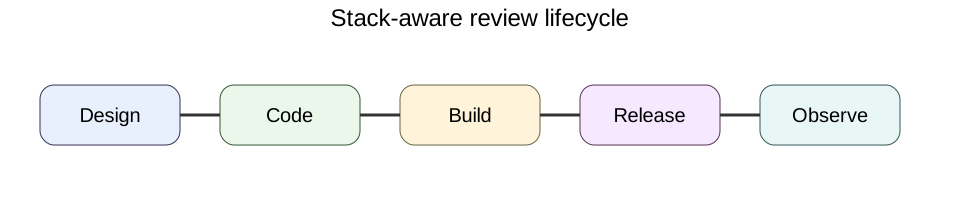
Evidence categories
For high-value changes, request evidence in five categories:
- identity and authorization;
- input and object handling;
- browser or client exposure;
- operational endpoints and secrets;
- logging and abuse visibility.
Common mistakes by stack family
| Stack family | Common mistake |
|---|---|
| SPA + API | auth enforced only in UI state |
| SSR / edge | personalized content cached too broadly |
| Python admin-heavy apps | admin or maintenance endpoints become product backdoors |
| Java / .NET enterprise APIs | route auth exists but object-level ownership checks drift |
| Go microservices | fast handlers skip centralized authorization and telemetry patterns |
Release decision guide
Block when a change introduces new browser-held privilege, new cross-tenant data access, new admin bypass, or new third-party trusted code without clear controls.
Warn and track when the risk is bounded, monitored, and has an owner plus a near-term remediation date.
Related pages
- Node.js, Next.js, and React Security Review Guide
- Python, FastAPI, and Django Security Review Guide
- Spring, ASP.NET, and Go Service Security Review Guide
Author attribution: Ivan Piskunov, 2026 - Educational and defensive-engineering use.