🔍 GitHub Actions and GitLab Components Review Playbook
Intro: Third-party pipeline logic is code execution with transitive trust. Reviewers should treat it like software supply chain and privileged automation at the same time, not like a harmless convenience snippet.
What this page includes
- how to review third-party GitHub Actions and GitLab components
- version pinning, source trust, and secret-minimization decisions
- self-hosted runner implications
- what to approve, reject, or quarantine
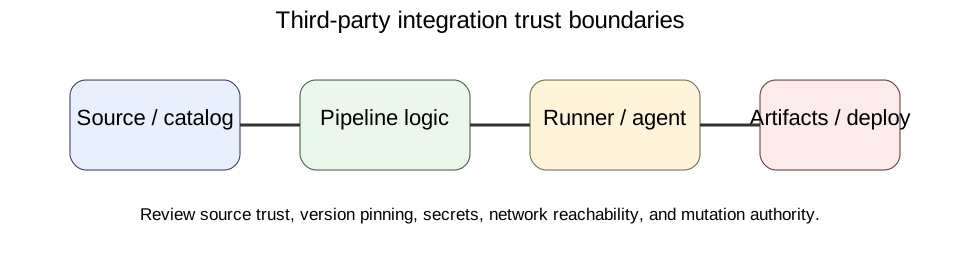
Review questions for any reusable pipeline component
- Who maintains it, and how do we know?
- Is the source reviewed, or only the marketplace/catalog description?
- Is the component pinned to a trustworthy immutable version or digest?
- What secrets, tokens, or cloud trust relationships are available at runtime?
- Could the component modify build outputs, manifests, pull requests, or releases?
- Would a compromised runner make the damage much worse?
Safer GitHub Actions patterns
Prefer:
- pinning actions to a full commit SHA for higher-trust workflows;
- reviewing source before granting secrets or write permissions;
- using OIDC instead of long-lived cloud secrets where appropriate;
- separating untrusted pull-request execution from privileged deployment paths.
Safer GitLab component patterns
Prefer:
- using published, versioned components rather than floating references;
- auditing
include: componentsource and inputs before adoption; - using minimum-scope tokens and segregated runner pools;
- avoiding branch-based floating references for sensitive component usage.
Red flags
- floating refs such as
main,master, or unfixed latest tags in privileged paths; - undocumented secret usage;
- components that download and execute additional remote content at runtime;
- privileged jobs running on shared or reusable runners with weak isolation;
- actions or components with write access to repo, artifacts, or deployment targets without clear need.
Related pages
- Marketplace, Actions, Images, Helm, and Public Component Review
- Vendor Agents, Runners, and Build-Integration Trust Boundaries
- snippets/ci/third-party-component-review-checklist.md
Author attribution: Ivan Piskunov, 2026 - Educational and defensive-engineering use.